Capture the estimate
Record an already-issued estimate and link back to the original. Keep its next action and due date together.

AFTER THE QUOTE. BEFORE THE JOB.
Keep issued estimates, due follow-ups and supporting evidence in one working queue. Give the handoff the same attention you give the job.
For project-based service businesses. Current workflow uses manual evidence and human follow-up.
The working process
Customer conversations, booking details and deposit reports often live in different places. FusionClaw keeps a case record and next action alongside links to the evidence.
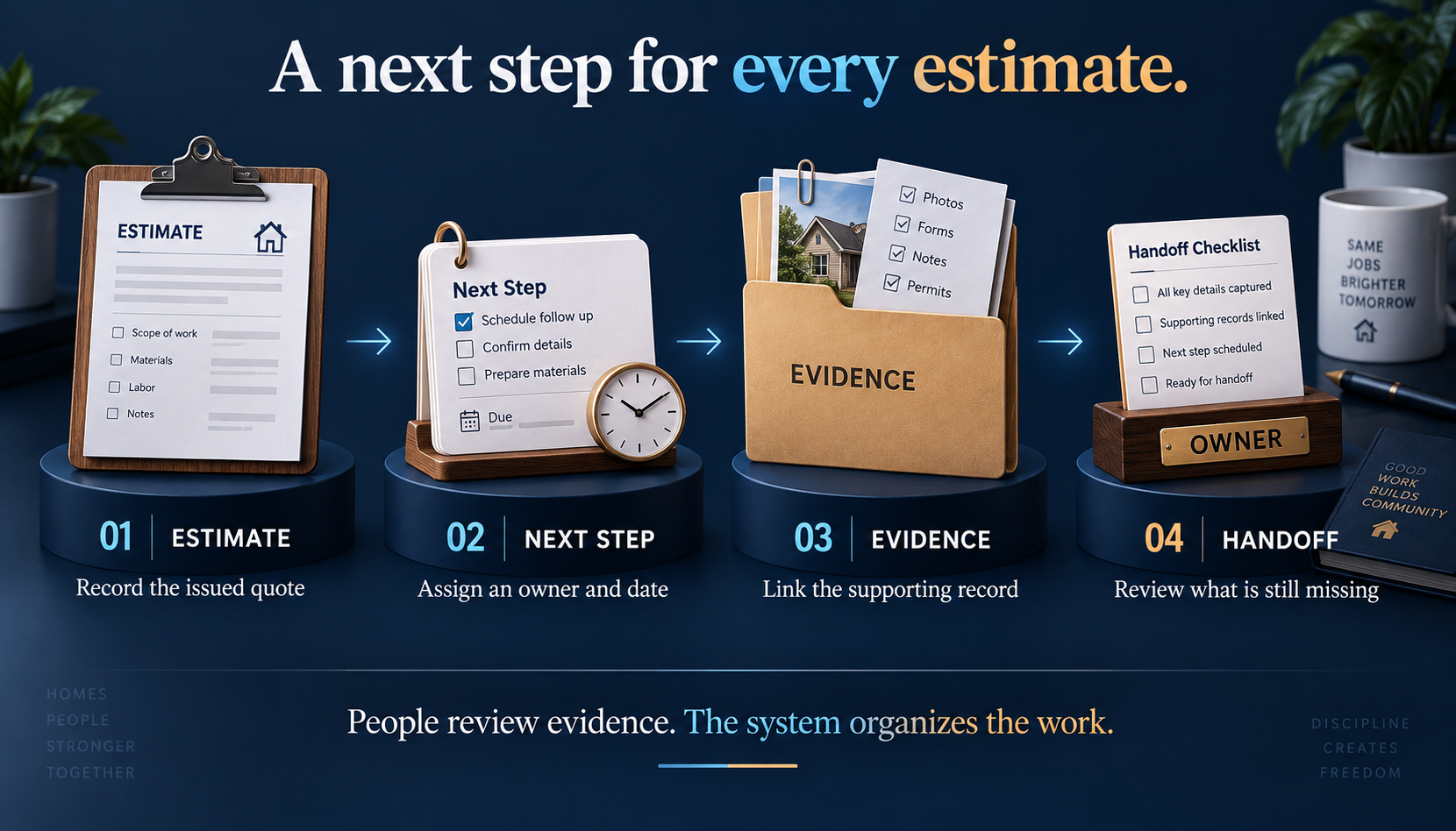
Record an already-issued estimate and link back to the original. Keep its next action and due date together.
Refresh due work, claim a follow-up and handle the actual customer conversation through your existing tools.
Record what happened with a supporting link. Case history keeps the update, state and evidence together.
Track acceptance, booking or an owner-reported deposit. Review missing information before the work moves on.
A focused workspace
Start with work you have already quoted. Keep your estimate system and communication tools, and use the case record to coordinate what comes next.
Open estimate cases ↗Existing workspace access required.
Original estimate link, amount, current stage, next action and due date. Updates include a supporting evidence link.
Due follow-ups enter a working queue. A person claims the task and records the actual outcome. An expired claim goes to review rather than an automatic resend.
Review the sequence of case updates and their evidence. An owner-reported deposit remains a report, not a verified payment collection.
Keep the distinction clear
The current workspace organizes human work. It does not send customer messages, book appointments, collect payments or independently verify evidence.
Record real customer responses and supporting links. A state change does not prove that the underlying event occurred.
Follow-up happens through your existing authorized channels. No outbound connector is included in this workflow.
A managed implementation needs an agreed source system, process owner and acceptance criteria. There is no self-serve service checkout on this page.
START WITH THE WORK YOU ALREADY HAVE
Bring your current process, the systems you use and the handoff you want to improve. We can scope an estimate follow-through engagement around that workflow.
Discuss the workflow with Rob ↗No. The current queue supports human follow-up and evidence recording. Customer communications remain in your existing tools.
No. Deposit reports are entered by the owner with a supporting link. They are not Stripe-verified collections or reconciled bank receipts.
The workflow links to your original estimate and evidence. A prospective engagement begins by checking whether this adds value to your existing process and what, if any, integration is needed.
Yes. The broader MIT-licensed foundation remains available in the source repository. Those additional modules are separate from this focused service scope.